
The Power of Plants and Flowers in Your Living Space
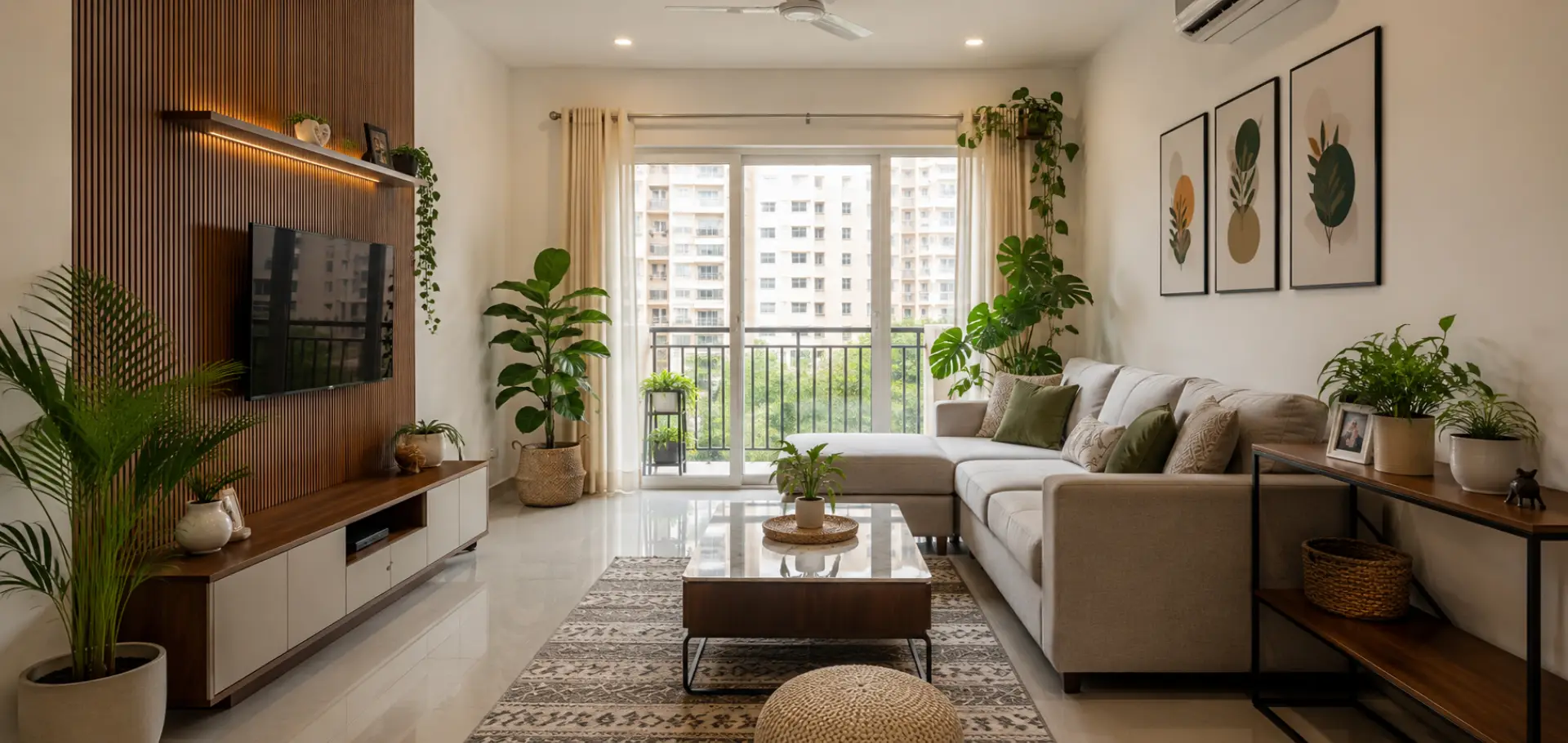
Plants and flowers in the living room are one of the easiest ways to make a home feel fresh, warm and inviting. Whether you live in a modern apartment, luxury villa or compact home in Hyderabad, incorporating greenery into your interiors can add colour, texture and a natural connection to the space.
Modern living room design goes beyond furniture, wall colours and lighting. Indoor plants, flowers and decorative planters can add balance and warmth to the space. Choosing the right plants and placement based on light, heat and humidity helps them complement the furniture.
This guide is built around the questions Hyderabad homeowners actually ask when they’re trying to use plants and flowers as part of their interior, not a general houseplant guide. It covers which plants suit Hyderabad’s apartments, balconies, and weather, where to place them around your furniture, how to style fresh flowers without cluttering the space, and the maintenance habits that matter more than any fixed watering chart.
In this guide:
• Which plants are best for Hyderabad homes
• Which plants work in low-light apartments
• What plants work well on a Hyderabad balcony
• Which plants are easiest to maintain
• Where to place plants in your living room
• How to decorate a small living room with plants
• How to use flowers without cluttering the space
• Choosing pots and avoiding water damage
• What actually affects watering (it’s not a fixed schedule)
• Common mistakes to avoid
• Frequently asked questions
Which Plants Are Best for Hyderabad Homes?
Hyderabad’s climate is largely dry and hot, with summer temperatures often crossing 40°C between March and June, a moderate monsoon from June to September, and mild, dry winters. Plants here need to tolerate heat and dry air more than humidity, which is the opposite of what a plant guide written for Mumbai or Chennai would prioritise. Snake plant, ZZ plant, money plant (pothos), and aloe vera handle both the heat and the dry, air-conditioned indoor air common in Hyderabad’s apartments, which is why they show up in nearly every Hyderabad home that keeps its plants alive past the first few months.
Rubber plant and areca palm do well too, but need brighter light and more consistent watering, so they suit homes with a large window or a covered balcony rather than a dim interior room, and need extra watering attention during Hyderabad’s peak summer.
| Plant | Handles AC / Dry Air | Handles Direct Summer Sun | Good For |
|---|---|---|---|
| Snake plant | Yes | Tolerates, prefers shade | Bedrooms, low-light corners |
| ZZ plant | Yes | No, avoid direct sun | Living rooms, offices |
| Money plant (pothos) | Yes | Tolerates partial sun | Shelves, hanging baskets, water jars |
| Aloe vera | Tolerates | Yes, thrives in sun | Sunny balconies, kitchen windows |
| Areca palm | Needs some humidity | Tolerates filtered sun | Bright living rooms, covered balconies |
| Rubber plant | Tolerates | Prefers filtered light | Living rooms with a large window |
Not every plant on this list behaves the same way in every part of the city. A snake plant on a shaded balcony in a Gachibowli or Kondapur high-rise will need far less water than the same plant on an open west-facing balcony in a lower-rise independent house, where afternoon heat is more intense.
Which Plants Work in Low-Light Apartments?
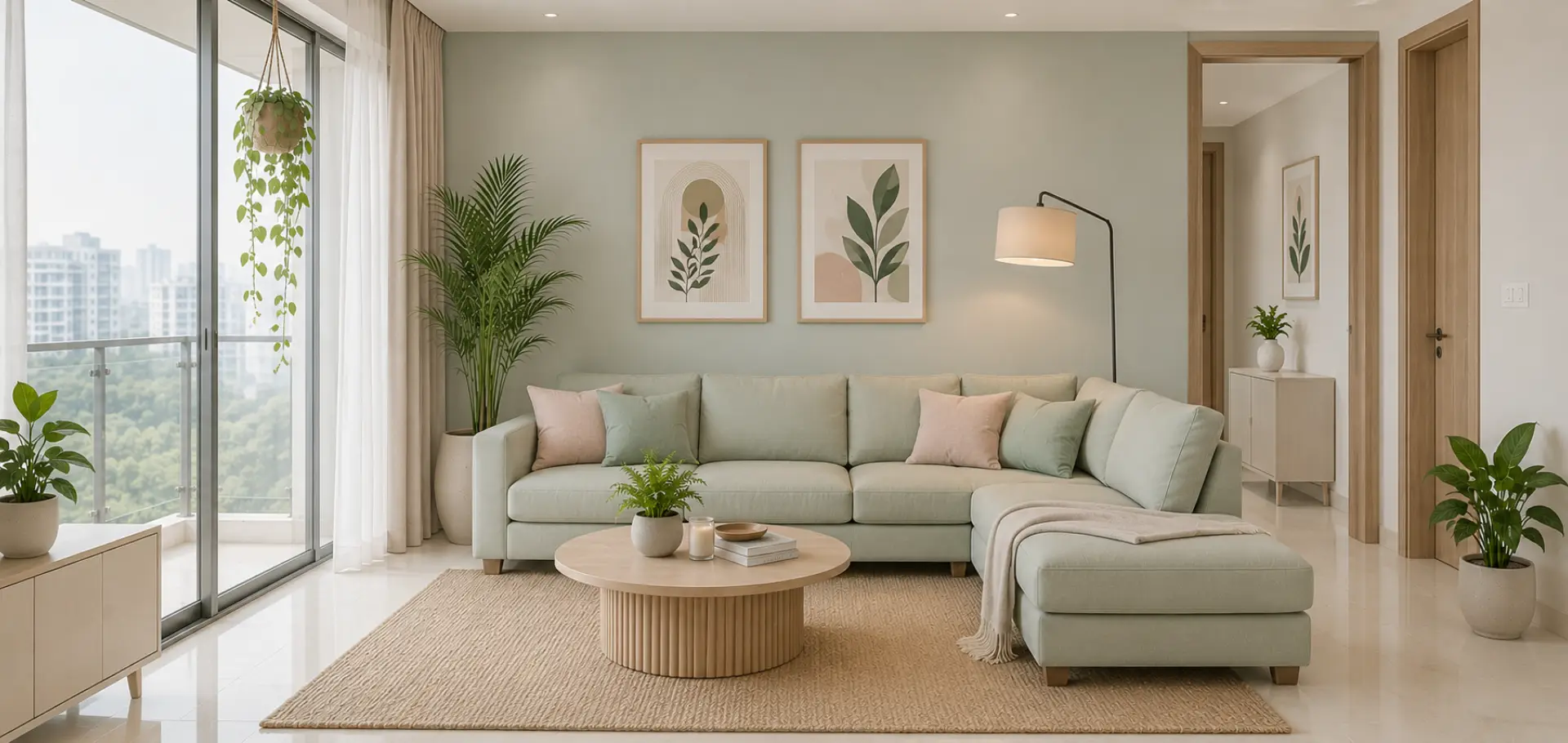
Many Hyderabad flats, especially lower floors in dense areas or homes with windows facing a narrow lane, get very little direct sun. ZZ plant, snake plant, and money plant are the most reliable choices here since they’re adapted to grow under tree cover in their native habitat and don’t need bright light to survive indoors.
Peace lily and spider plant also manage in low light, though peace lily will flower less without at least some indirect daylight through the day.
• Place low-light plants a few feet from the nearest window rather than in the darkest corner of the room
• Rotate the pot a quarter turn every couple of weeks so the plant doesn’t lean or grow lopsided toward whatever light it does get
• If a room has no natural light at all, even low-light plants will eventually decline, this isn’t a lighting condition any houseplant tolerates indefinitely
What Plants Work Well on a Hyderabad Balcony?
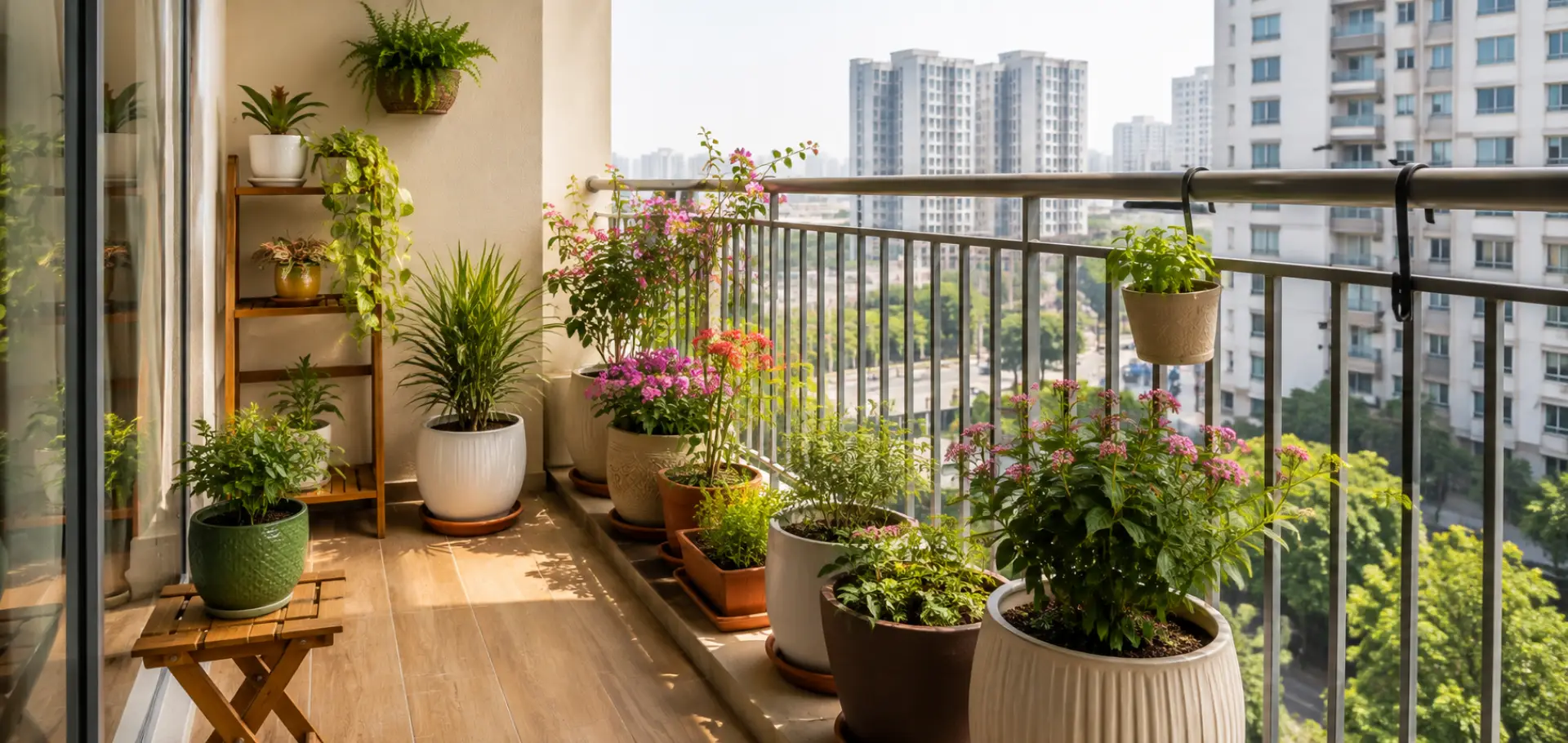
Balcony conditions depend heavily on which direction the balcony faces, and in Hyderabad this matters more than in cooler cities because summer sun is intense. A south or west-facing balcony gets strong, harsh afternoon sun for much of the year, especially from March to June, and suits tougher, sun-loving plants. A north or east-facing balcony gets gentler morning light or mostly shade, and needs plants that don’t scorch without direct sun.
| Balcony Direction | Light Condition | Suitable Plants |
|---|---|---|
| South or west facing | Strong, direct afternoon sun | Aloe vera, bougainvillea, hibiscus, marigold |
| North or east facing | Mild morning sun or mostly shade | Money plant, ferns, peace lily |
| Covered or partially shaded | Filtered light through the day | Areca palm, spider plant, herbs |
Balconies also need pots with proper drainage and a saucer underneath, since water running off a balcony can stain the flooring below or, in shared buildings, the neighbour’s window. Hyderabad’s monsoon (roughly June to September) is moderate rather than heavy compared to coastal cities, but sudden downpours still happen, so move pots away from the edge where rainwater pools, and check drainage holes aren’t blocked after heavy rain.
Which Plants Are Easiest to Maintain?
For a busy household, the plants that ask the least are snake plant, ZZ plant, money plant, and aloe vera. All four tolerate missed waterings, don’t need frequent repotting, and recover quickly if neglected for a week or two, which matters more in practice than any other single factor.
• Snake plant and ZZ plant: water only when the soil is fully dry, roughly every couple of weeks, less in cooler months
• Money plant: grows in a water jar with no soil at all, which removes watering guesswork entirely
• Aloe vera: needs a sunny spot but very little water, overwatering is a bigger risk for this plant than underwatering
• Peace lily and areca palm need more regular attention and are better suited to someone who enjoys the routine rather than someone looking for the least effort
Where Should I Place Plants in My Living Room?
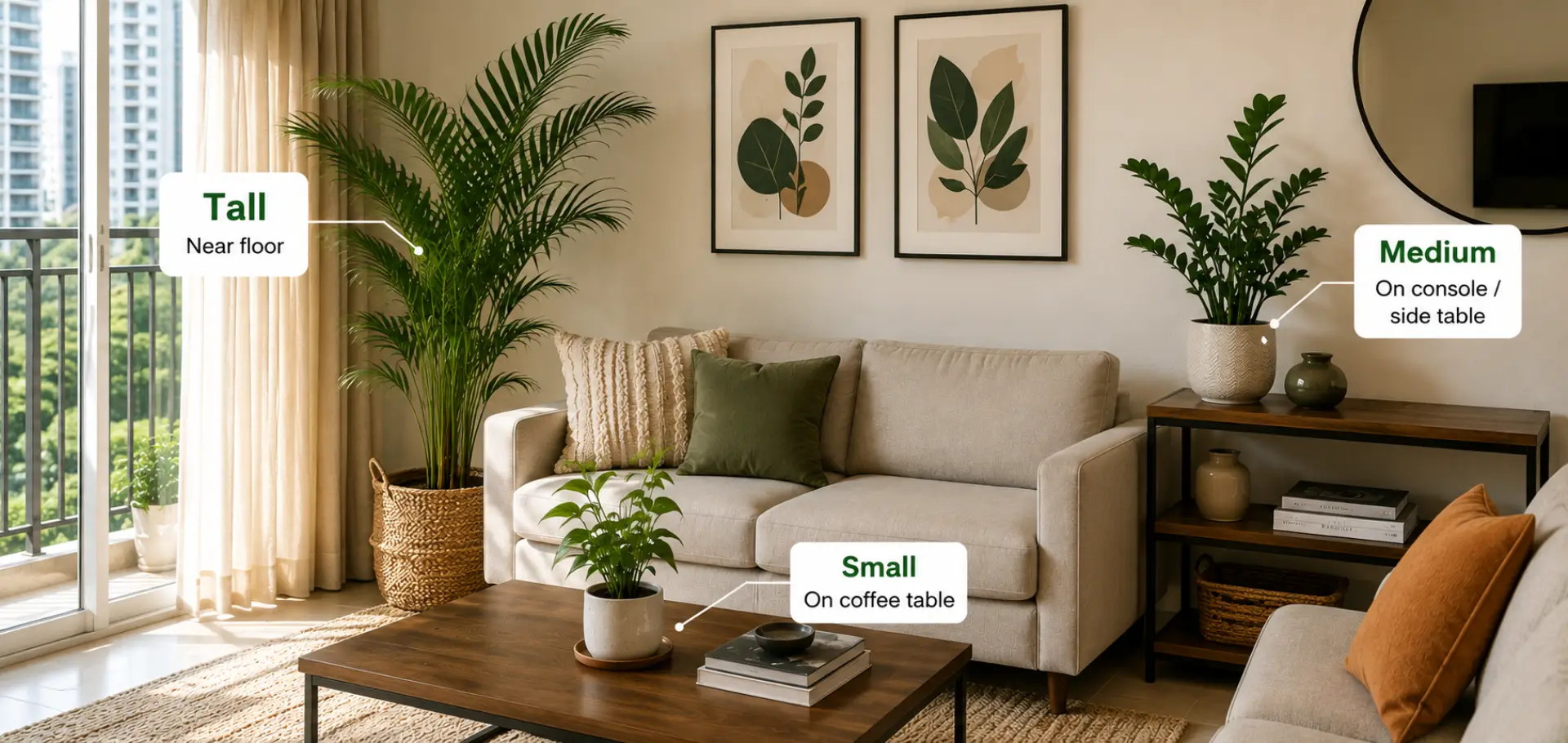
Placement should follow the furniture layout, not the other way round. A tall plant works as a visual anchor next to a sofa or in an empty corner; a medium plant suits a console table or the side of a TV unit; small pots work on a coffee table or open shelf without competing with what’s already there.
• Beside a sofa: one tall plant (areca palm, rubber plant) at floor level fills the gap where a side table alone would look sparse
• Near a TV unit: keep plants to one side rather than both, and choose a pot height below the screen so it doesn’t visually compete with it
• On a console table: one medium pot, or two of different heights, works better than a row of identical small pots
• On open shelves: a trailing plant like money plant softens the straight lines of the shelf and fills gaps between books or decor
• On a coffee table: keep it small enough that it doesn’t block sightlines across the table when people are seated
As a rough guide, a floor plant should reach somewhere between the top of your sofa’s armrest and eye level when seated. Taller than that in a small room and it starts to dominate the space rather than complement it.
How Can I Decorate a Small Living Room With Plants?
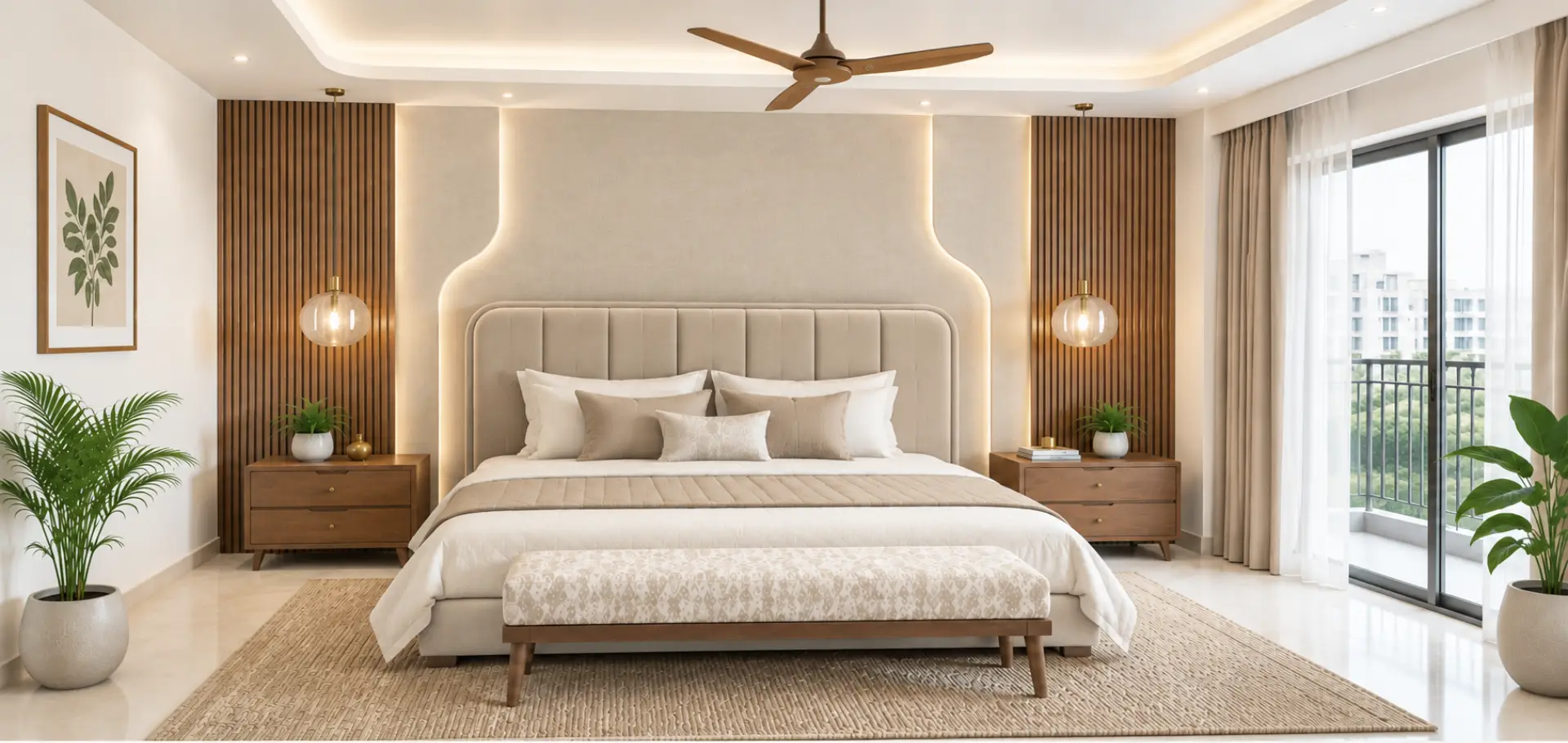
In a 1BHK or a compact 2BHK living room, the mistake is usually adding too many small pots rather than too few. A cluttered mix of pots on every surface makes a small room feel smaller. Two or three plants of different heights, placed deliberately, do more for the room than eight scattered ones.
• Use height instead of floor space: a tall floor plant in one corner takes up less visual room than three medium pots spread across a shelf
• Hang a trailing plant like money plant from a wall bracket or high shelf to add greenery without using any floor or table space at all
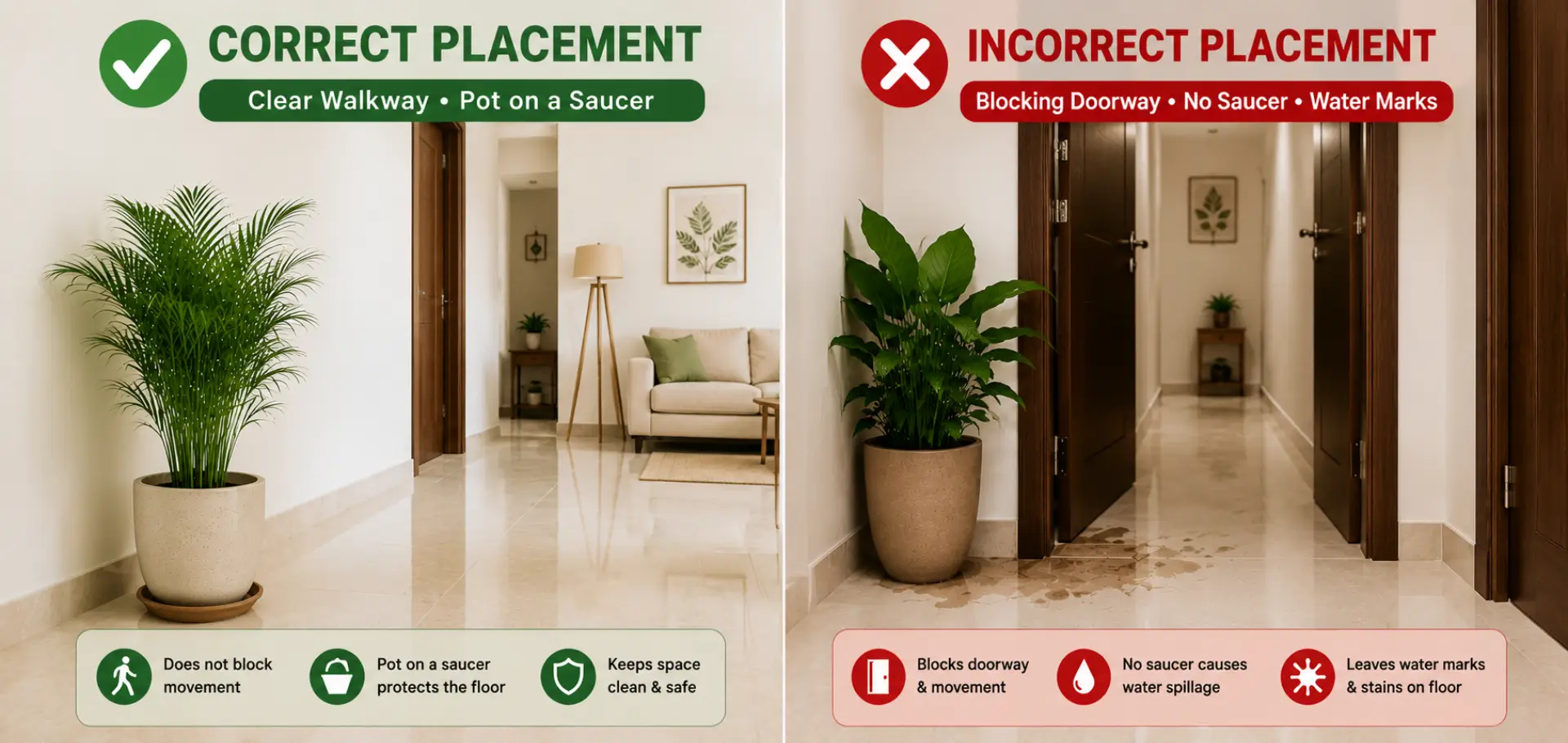
• Keep walking paths completely clear, a pot that forces people to step around it will get knocked over eventually
• Choose one focal plant rather than scattering small pots in every corner of the room
How Should I Use Flowers Without Making the Space Look Cluttered?
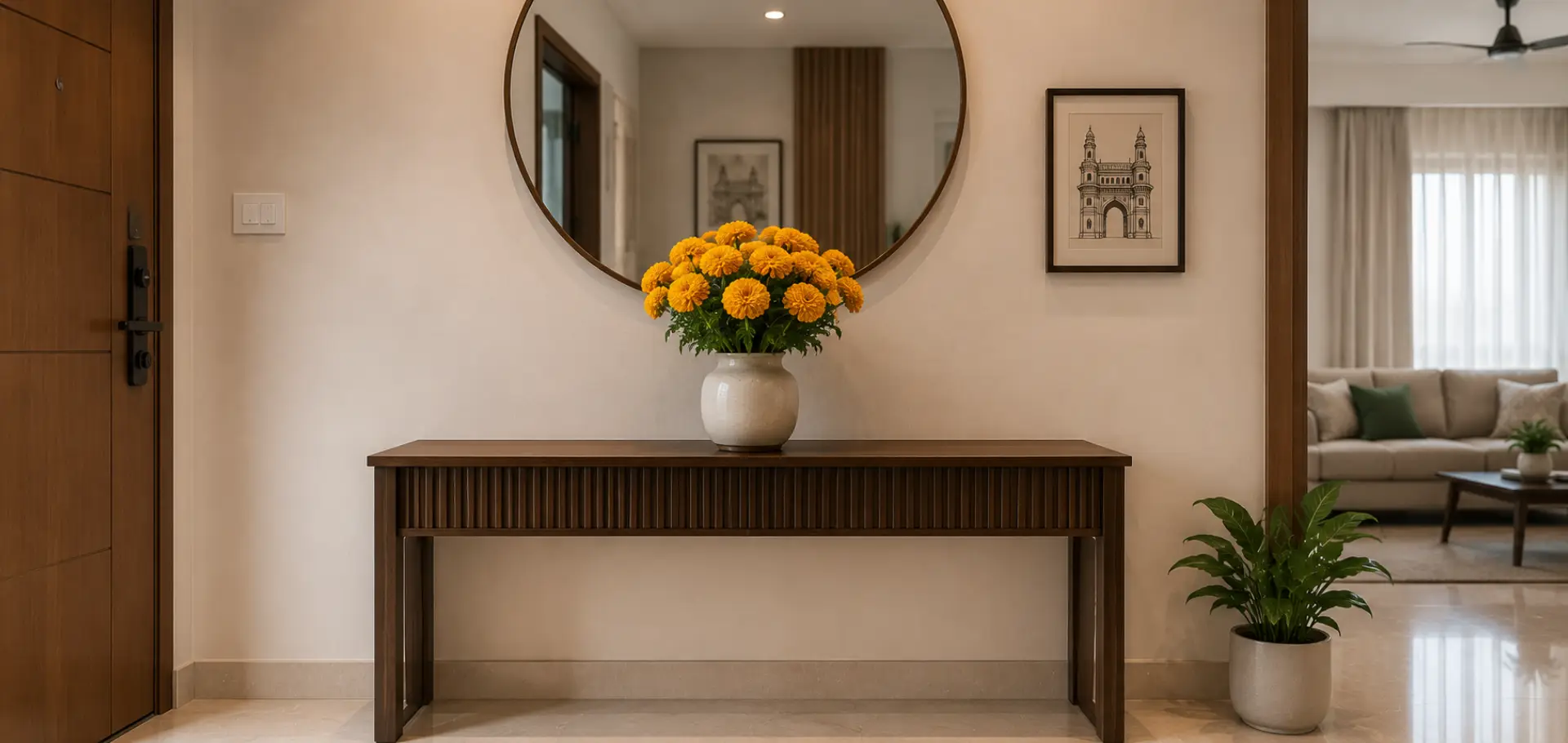
Fresh flowers work best as a temporary accent rather than a permanent fixture, since most common flowers used in Hyderabad homes, marigold, chrysanthemum, roses, jasmine, last only a few days to a week indoors before wilting, and wilt faster in Hyderabad’s heat than they would in a cooler city. Keeping the arrangement simple avoids the cluttered look that comes from mixing too many colours or too many small vases around the room.
• One flower variety in one vase reads as more intentional than a mixed bouquet spread across several containers
• Marigold and chrysanthemum work well for festive or everyday colour and are widely available and inexpensive across most of India
• Jasmine and rose are better suited to a small vase near a seating area or entryway, where their scent is noticeable without overwhelming the room
• Tulsi, where it’s part of the household’s daily routine, is usually kept in its own dedicated pot near an entrance or a puja space rather than mixed into general living room styling
Choosing Pots and Avoiding Water Damage on Hyderabad Flooring
Marble, vitrified tile, and wooden flooring are common in Hyderabad homes and all three can stain or warp from water sitting under a pot. A pot without a saucer, or a saucer that isn’t checked and emptied after watering, is the most common cause of flooring damage from indoor plants.
• Always use a saucer under indoor pots, and empty it after watering rather than letting water sit for days
• Terracotta pots breathe better and reduce waterlogging risk but can leave a ring mark on polished flooring if placed directly without a saucer or coaster
• For balconies, raise pots slightly off the floor with a stand or pot feet so water drains away instead of pooling against the tiles
• During monsoon, check saucers more often since humidity slows evaporation and water can sit longer than expected
What Actually Affects Watering (It's Not a Fixed Schedule)
A fixed “water once a week” rule doesn’t hold up in Hyderabad, because how fast soil dries out depends on the plant, the pot material, the room’s light, whether it’s air-conditioned, and the season. The same snake plant will need water far less often in Hyderabad’s mild December than in the peak heat of May.
• Check the soil before watering: push a finger an inch into the pot, if it’s still damp, wait a few more days regardless of what a schedule says
• Air-conditioned rooms dry out soil faster than expected despite feeling cooler, so plants indoors under regular AC use may need slightly more frequent checking than the same plant in a naturally ventilated room
• Terracotta pots dry out faster than plastic or ceramic ones since the material itself absorbs and releases moisture
• During monsoon, reduce watering frequency for most indoor plants since ambient humidity keeps soil damp for longer, and overwatering during this period is a common cause of root rot
Common Mistakes to Avoid
• Overcrowding a small room with too many pots, which makes the space feel cluttered rather than lush
• Placing a pot where it blocks a walking path or a door’s swing, it will eventually get knocked over
• Setting a water-sensitive pot directly on marble or wood flooring without a saucer or stand
• Assuming every plant needs the same watering schedule, regardless of season, pot material, or whether the room is air-conditioned
• Choosing a plant based on how it looks in a shop without checking whether the room’s actual light matches what it needs
Expert Recommendation
Insidez Interiors’ design team recommendation: “In Hyderabad homes, we plan plant placement around two things first, the direction the room or balcony faces, and whether it’s air-conditioned. Given how intense the summer heat gets here, those two factors decide more about which plant will survive than anything else. Clients who pick a plant because it looked good in a nursery, without checking the room’s actual light and airflow, are usually the ones replacing it within a few months.”
Frequently Asked Questions
Which indoor plants survive best in Hyderabad's summer heat?
Aloe vera, snake plant, and money plant tolerate Hyderabad’s summer heat well, though a plant on a west-facing balcony still benefits from some afternoon shade, ideally provided by curtains, a jaali, or a shade net, between March and June when temperatures are highest.
Do air conditioners harm indoor plants?
AC air is drier than normal room air, which can dry out soil and leaf tips faster than expected. It’s not usually harmful on its own, but plants in AC rooms often need slightly more frequent soil checks than the same plant in a naturally ventilated room.
Can plants survive on a balcony during Hyderabad's monsoon?
Yes, Hyderabad’s monsoon (roughly June to September) is moderate rather than heavy, but drainage still matters since waterlogged soil leads to root rot. Raise pots off the floor, check that drainage holes aren’t blocked after a downpour, and reduce additional watering since rain already keeps soil damp.
How many plants should I keep in a small living room?
Two or three plants of different heights, placed deliberately, usually work better in a small 1BHK or 2BHK living room than many small pots scattered across every surface.
Which plants are safe to keep in a bedroom?
Snake plant and peace lily are common bedroom choices since they tolerate lower light and don’t need daily attention. Avoid plants that need bright direct sun in a bedroom that doesn’t get much natural light.
Do plants really purify indoor air significantly?
The effect is real but limited at the scale of a normal room; a couple of houseplants won’t meaningfully replace ventilation. The more consistent benefits are added humidity, texture, and the calming effect of having greenery indoors.
What's the easiest way to avoid water stains on marble or wood flooring?
Always place a saucer under the pot and empty it after watering rather than letting water sit. For balconies, a small stand or pot feet that lifts the pot off the floor helps water drain away instead of pooling.
Can I keep fresh flowers and plants together in the same room?
Yes, and they serve different purposes: plants are a long-term styling element, while fresh flowers like marigold or chrysanthemum work as a shorter-term accent for a console table or entryway that gets refreshed every few days.
Do all parts of Hyderabad need the same plant care approach?
Mostly, since the city’s overall climate is fairly consistent, but a balcony that gets full west sun will dry out much faster than a shaded one in the same building. Always adjust watering based on how quickly the soil in your specific spot actually dries out, not a generic chart.
Conclusion
• Match the plant to the room’s real light, heat, and airflow, not how it looks in the nursery
• Snake plant, ZZ plant, money plant, and aloe vera are the most forgiving choices for Hyderabad’s heat and dry indoor air
• Place plants by furniture height, tall near the sofa, medium on consoles, small on coffee tables and shelves
• In small living rooms, two or three well-placed plants work better than many scattered pots
• Watering depends on the plant, pot, season, and whether the room is air-conditioned, not a fixed weekly schedule
If you’re planning a living room or home interior and want plants worked into the layout from the start, rather than added as an afterthought, Insidez Interiors can help plan placement alongside your furniture and lighting. Reach out for a design consultation suited to your home.
